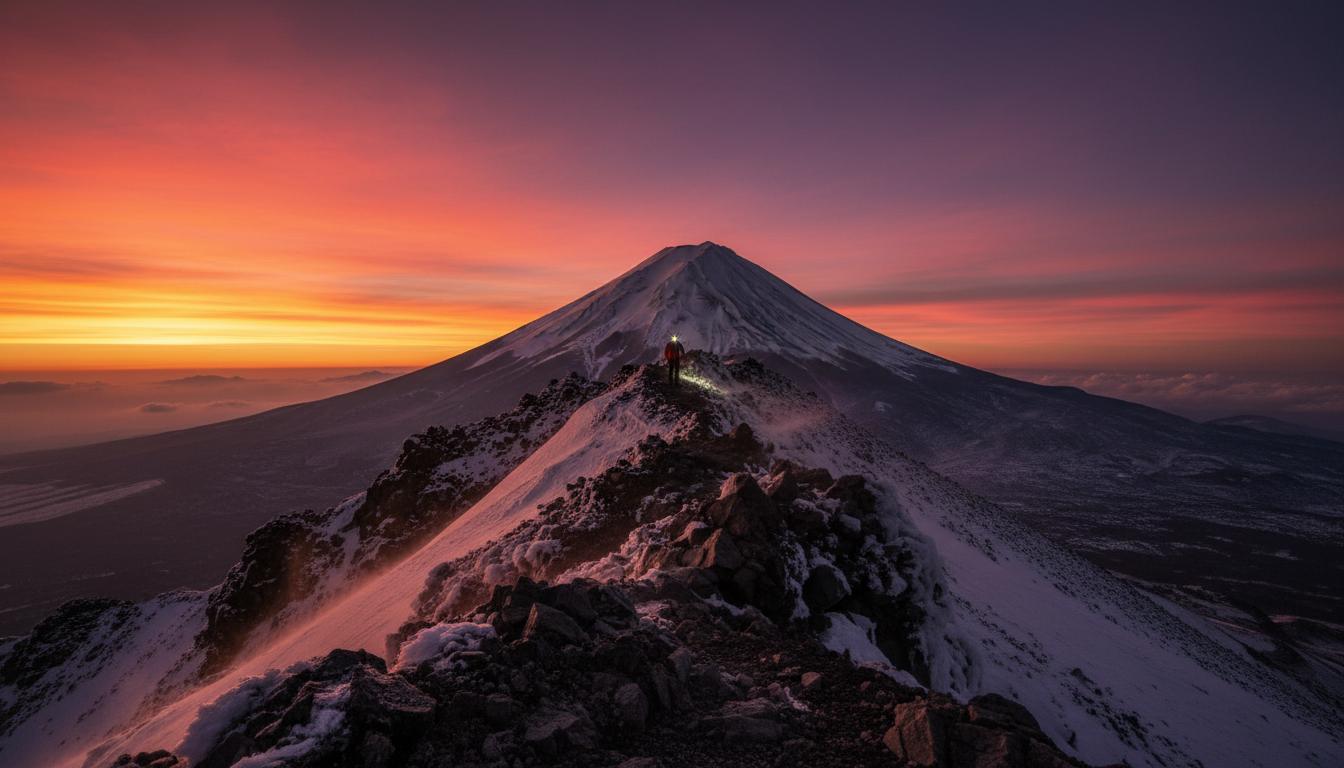
3,776 Meters.
One Night. Go Up.
Guided expeditions on all four Mount Fuji routes. Summer climbs and winter technical. Max 6 people per group. No crowds, no shortcuts, no illusions.
Elevation Profile
5th Station to Summit · Yoshida Route
Four Routes. Five Options.
Each route is different. Pick the one that matches your fitness, experience, and tolerance for sand.
Yoshida Trail
The Standard. 90% of climbers. We do it smarter.
Subashiri Trail
Sand in your boots. Better descent. Fewer people.
Gotemba Trail
Longer. Higher gain. The real hike. Fewer huts.
Fujinomiya Trail
Shortest. Steepest. Highest start. Less acclimatization.
Winter Summit
Not a hike. Alpine climbing. Crampons. Ice axe. Serious.
Why Fuji Is Harder Than It Looks
Don't Summit
Almost half of the climbers who start don't reach the top. Altitude sickness, weather, exhaustion, or poor preparation. Most turn back between the 8th station and the summit.
At The Top In July
It's summer at sea level. At 3,776m it's winter. Wind chill makes it feel colder. We've seen -20°C with wind. People show up in shorts. Don't be those people.
Vertical Gain
From 5th station to summit is over 1,400 vertical meters. That's more than climbing the Empire State Building 4 times. At altitude, where there's 40% less oxygen.
Field Notes
“Fuji is 3,776m. That's high enough to get altitude sickness. If you feel it, we turn back. No shame in that. The mountain will be here next year. You need to be too.”
“Subashiri starts with 2 hours of sand in your boots. It's annoying. The summit compensates. The sand descent is the most fun you'll have on the way down — half-running, half-sliding, laughing like a kid.”
Get Conditions Reports
Weekly weather and conditions updates during climbing season. No spam. Unsubscribe anytime.